


Featured
Kiss Live Chat
WebiOS
Per the app: Video chat 1-on-1 on the web or with the iPhone app.
You can spend months studying a language and still freeze when a real person says hello. A video call adds accents, interruptions, facial expressions and the small unpredictability missing from a textbook. But not every video-chat app is built to teach, and a platform with built-in translation is not automatically a language-learning platform.
Quick answer: Use a dedicated language-exchange app if you want partners who explicitly agree to help each other learn. Use a social video chat or topic room if you want spontaneous listening and speaking practice. Use translation tools sparingly and check exactly what they translate. For progress, a short structured conversation with feedback usually beats endlessly skipping random matches.
| Approach | Typical examples to investigate | Best for | Main limitation |
|---|---|---|---|
| Dedicated language exchange | Tandem, HelloTalk | Finding a reciprocal practice partner | Not every contact is equally available or serious |
| Scheduled lesson or tutoring | italki and other tutoring services | Structured corrections and clear goals | Often involves paying for instruction |
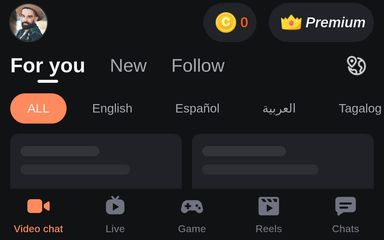
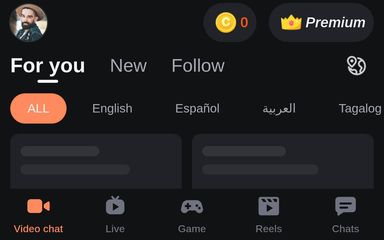
| Social chat, video or rooms | Kiss Live Chat, Livego, YOYO, Paltalk and other communities | Realistic speech, casual conversations, cultural exchange | People did not necessarily join to teach |
These are different use cases. This directory lists several of them, but an app's position in the list is not evidence that it has more qualified teachers or more native speakers online today.
An app might translate a typed message or display translated text during a call. That is a convenience feature. Language practice is the process of understanding and producing speech yourself, receiving useful corrections, and returning to the same difficult patterns until they become easier.
Translation can help when a conversation gets stuck. But if every sentence is immediately converted into your native language, you may never practice understanding the original phrase. An effective compromise is to let a short exchange happen naturally, ask for clarification, then use translation to check one confusing expression after the turn.
Different products may implement translation in different ways; do not assume voice translation, subtitle translation and typed-message translation are interchangeable. The translation feature guide explains the distinctions in more detail.
Start by sharing what you actually want: “I'm practicing everyday English. I can help with Spanish for ten minutes if you'd like.” That is more honest than pretending to be on a dating app or asking a stranger to become an unpaid teacher without consent.
A good exchange begins with three agreements: which language comes first, how much correction each person wants, and how long the call will last. Some people prefer to finish a story before hearing corrections. Others want gentle feedback after each sentence. Neither style is wrong, but surprising someone with constant corrections can ruin the conversation.
If the person is not interested in language exchange, respect their choice and move on. A social platform should not require every user to teach you.
| Time | Activity | What you practice |
|---|---|---|
| 0–2 min | Introduce yourselves and agree on correction style | Basic fluency and boundaries |
| 2–5 min | Talk about something you did today | Past tense and everyday vocabulary |
| 5–8 min | Ask follow-up questions | Active listening and spontaneity |
| 8–11 min | Switch languages if both agreed | Reciprocal practice |
| 11–13 min | Review two phrases each person wants to improve | Feedback and recall |
| 13–15 min | Agree on next topic or end politely | Closing a conversation naturally |
Do not make the clock feel like a test. The structure is there to help both people participate rather than allowing one confident speaker to dominate the whole call.
Avoid questions that invite only yes or no. Instead of “Do you like music?”, ask, “What's a song you know by heart, and why do you remember it?” Instead of “Where are you from?”, try, “What's something visitors usually misunderstand about where you live?” You can also ask someone to describe a typical meal, tell a funny travel mistake, or recommend an inexpensive weekend activity.
Questions like these produce useful vocabulary while still sounding like human conversation. If the other person gives a short answer, reflect one detail back: “You said your town is quieter during winter—what changes?” That habit makes you a better conversation partner in any language.
Good audio matters more than cinematic video. Place the microphone away from fans and loud speakers, use headphones if you hear echo, and make sure your browser selected the intended audio input. If a site provides subtitles or text chat, use them as a temporary aid rather than a substitute for listening.
A language app can also have a higher language-learning value when you can replay your own written notes after a call. Do not secretly record or publish another participant; ask permission before recording and follow the applicable laws and platform rules.
A one-on-one call is useful when you need uninterrupted time to speak. A group room lets you hear a wider variety of accents and conversational styles but can be difficult when several people interrupt each other. Start by listening in a group and contribute one question when you feel ready. When you need targeted practice, move to a consensual one-on-one exchange or a tutor.
You can browse group video chat apps or chat room apps if you would rather listen to a topic discussion first. If you need a specific person to coach you every week, a structured language-exchange community will usually be more reliable.
After each call, write down four things:
A log turns a fun social moment into a habit without pretending that spontaneous chatting is a certified curriculum. Reuse the same topic with a different person after a week to notice whether you speak more naturally.
Language learning often means talking with people from countries you know little about. Avoid assuming someone will reveal their city, personal address, workplace or identity just because you are curious about their culture. Do not send documents, one-time codes or money to a new contact. If someone turns a language exchange into repeated requests for gifts or off-platform payment, end the interaction.
A comfortable first session needs a clear exit: “Thanks, I enjoyed practicing. I need to go now.” A polite boundary is part of language learning too.
They can help with spontaneous speaking, but they are unpredictable. They work best as extra practice alongside structured study or a dedicated exchange partner.
No. Translation helps comprehension but does not replace producing speech, receiving feedback and reviewing mistakes. Use it selectively.
Start with a dedicated language-exchange platform when reciprocity is essential. Use social video apps when your goal is casual real-world conversation and the other person wants to participate.
A manageable ten- to fifteen-minute conversation can work well. What matters is a shared plan and a comfortable ending, not a universal ideal duration.
Only with the other person's informed consent and in line with applicable law and platform rules. Private notes about your own learning are often sufficient.
Pick one topic you enjoy, prepare three follow-up questions, and try a short conversation with a willing partner. A useful practice call is not the one with the most filters or the longest duration. It is the one that gives both people room to talk. Explore the VideoChatApps directory for different conversation formats, and verify each platform's current features before starting.
Video chat apps we feature.
WebiOS
Per the app: Video chat 1-on-1 on the web or with the iPhone app.

iOS
Per the app: iPhone party rooms: video chat plus question & challenge cards.
iOS
Per the app: iPhone video chat with real-time translation and moderation.
Featured = our editorial picks, shown first.How we pick